What Is Epitalon? Longevity Claims, Telomeres, and the Evidence Gap
Epitalon is a synthetic tetrapeptide searched as a longevity and telomere peptide, but the evidence does not support treating it as a proven anti-aging therapy. The most defensible summary is narrower: Epitalon has cell and animal research, a small and uneven human literature, and a lot of internet confidence sitting on top of unresolved safety and efficacy questions.
Quick answer: Epitalon, also spelled Epithalon or Epithalone, is the peptide Ala-Glu-Asp-Gly. It is discussed because studies have linked it to telomerase activity, telomere biology, melatonin regulation, antioxidant pathways, and lifespan models in animals. Those findings are interesting, but they do not prove that an epitalon peptide protocol extends human lifespan, reverses aging, or safely lengthens telomeres in people.
This article is educational only. It does not provide dosing, injection guidance, sourcing advice, clinic recommendations, treatment instructions, or a protocol for using Epitalon.
What is Epitalon peptide?
Epitalon is a short synthetic peptide made from four amino acids: alanine, glutamic acid, aspartic acid, and glycine. It is often described by the sequence Ala-Glu-Asp-Gly or AEDG.
The compound is associated with the Russian bioregulator research tradition around Vladimir Khavinson and epithalamin, a pineal gland extract. Epitalon is usually presented as a synthetic peptide related to that pineal extract research, not as a mainstream approved drug with a large modern clinical-trial file.
For searchers, the clean definition is this: Epitalon is a longevity-adjacent research peptide studied mostly for telomerase, telomere, pineal, melatonin, antioxidant, and aging-model effects.
That definition matters because much of the online copy skips a step. It moves from "studied in aging biology" to "anti-aging peptide" as if those are the same thing. They are not.
Why do people connect Epitalon with telomeres?
People connect Epitalon with telomeres because early cell-culture research reported that Epithalon could induce telomerase activity and telomere elongation in human somatic cells. A newer cell-line study also reported telomere length changes through telomerase upregulation or alternative lengthening mechanisms.
That is the scientific root of the claim. Telomeres are protective DNA-protein structures at chromosome ends. They tend to shorten with cell division and are often discussed in aging biology. Telomerase is an enzyme that can help maintain telomere length in certain contexts.
The evidence gap starts when cell findings are translated into consumer promises. A cell-culture result does not prove a safe, meaningful, whole-body human longevity effect. Telomere biology is not a simple "longer is always better" switch. Longer genetically influenced telomere length has been associated with tradeoffs in large human genetic research, including lower coronary heart disease risk signals but higher cancer-risk signals.
Quick answer: Epitalon is linked to telomeres because cell studies suggest it can influence telomerase or telomere length. That does not prove that taking Epitalon makes a person biologically younger or live longer.
How might Epitalon work?
Epitalon is usually discussed through several overlapping mechanisms, but none of them currently establishes a validated human anti-aging outcome.
The common proposed mechanisms include:
- telomerase activation or telomere-length changes in cell systems
- pineal or melatonin-related signaling
- antioxidant enzyme activity in animal and experimental models
- gene-expression effects in aging-adjacent pathways
- possible chromatin or histone-related interactions described in review literature
Those mechanisms are biologically plausible enough to explain why researchers are interested. They are not enough to support protocol claims, product promises, or precise outcome predictions.
Mechanism is useful when it explains what to study next. It becomes misleading when it is used as proof that a peptide will improve sleep, reverse aging, extend lifespan, or prevent disease in real people.
For a broader framework on this evidence jump, see Peptide research status explained.
What benefits are claimed for Epitalon?
Epitalon peptide benefits are commonly claimed around longevity, telomere support, sleep, melatonin, immune function, antioxidant defense, cancer protection, and general "anti-aging." Some of those are real research themes. The stronger consumer versions are mostly ahead of the evidence.
| Claimed benefit area | More evidence-aware reading | |---|---| | Telomere support | Cell studies are interesting, but human outcome relevance remains unproven | | Longevity | Animal lifespan findings exist; human lifespan extension is not established | | Sleep and melatonin | Pineal and melatonin-related research is part of the story, but this is not proof of a sleep treatment | | Antioxidant effects | Supported mainly by experimental and animal work, not broad clinical outcome certainty | | Immune or cancer claims | Highly sensitive area; avoid translating experimental findings into disease claims | | General anti-aging | Too broad unless tied to specific endpoints and controlled human data |
The safest phrasing is: Epitalon has been studied for aging-related mechanisms and biomarkers. The unsafe phrasing is: "Epitalon is proven to reverse aging." That second sentence is doing a lot of unpaid overtime.
What does the evidence actually support?
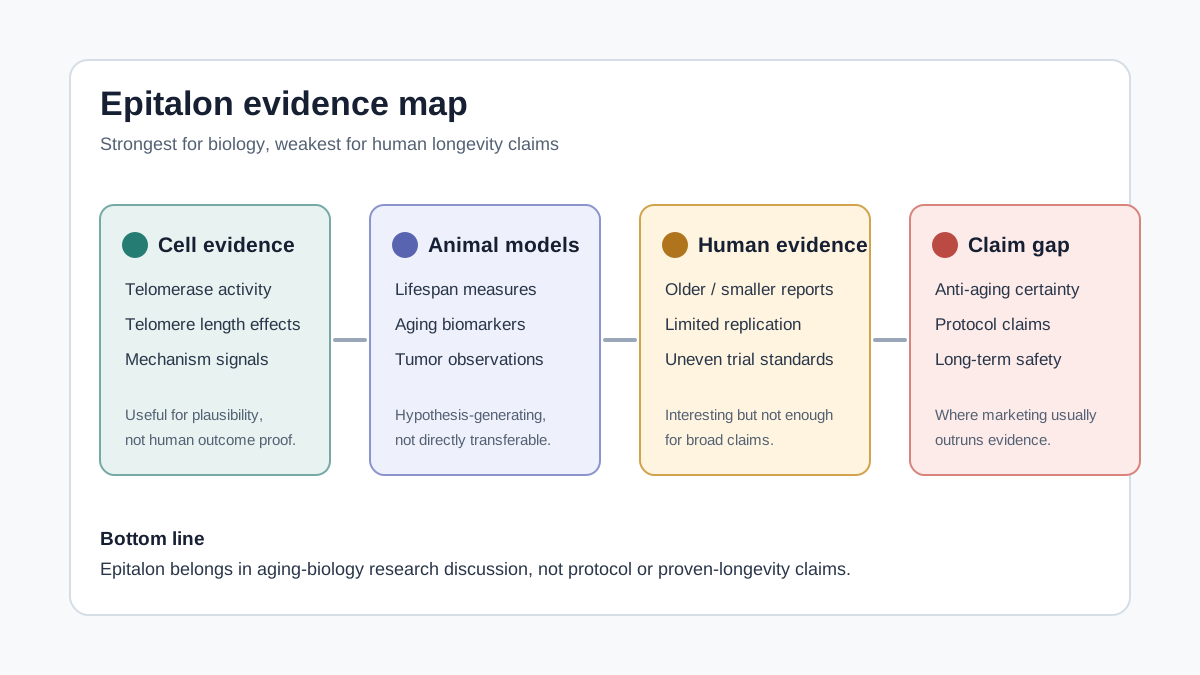
The Epitalon evidence base supports cautious research interest, not consumer certainty. It is strongest in mechanistic, cell, animal, and review-level discussion. It is weaker for independently replicated, large, modern human trials with clinically meaningful longevity outcomes.
Several evidence buckets are worth separating:
- Cell studies: These are the source of much of the telomerase and telomere discussion. They can show biological activity under controlled conditions, but they cannot establish real-world human benefit.
- Animal studies: Mouse studies have reported effects on lifespan-related measures, estrous function, and tumor-related observations in specific models. Animal lifespan data is hypothesis-generating, not proof of human lifespan extension.
A 2026 semaglutide lifespan study in older female mice likewise reported longer median survival, but it did not test human longevity and could not separate reduced food intake from other drug effects in its survival cohort.
- Human reports and older clinical literature: Some Epitalon and epithalamin research has involved older adults and aging-related endpoints, but much of it is small, older, geographically concentrated, or hard to compare with modern trial standards.
- Recent reviews: Reviews describe a broad body of experimental work and promising properties, while still acknowledging uncertainty around mechanisms and limited structural or physicochemical characterization.
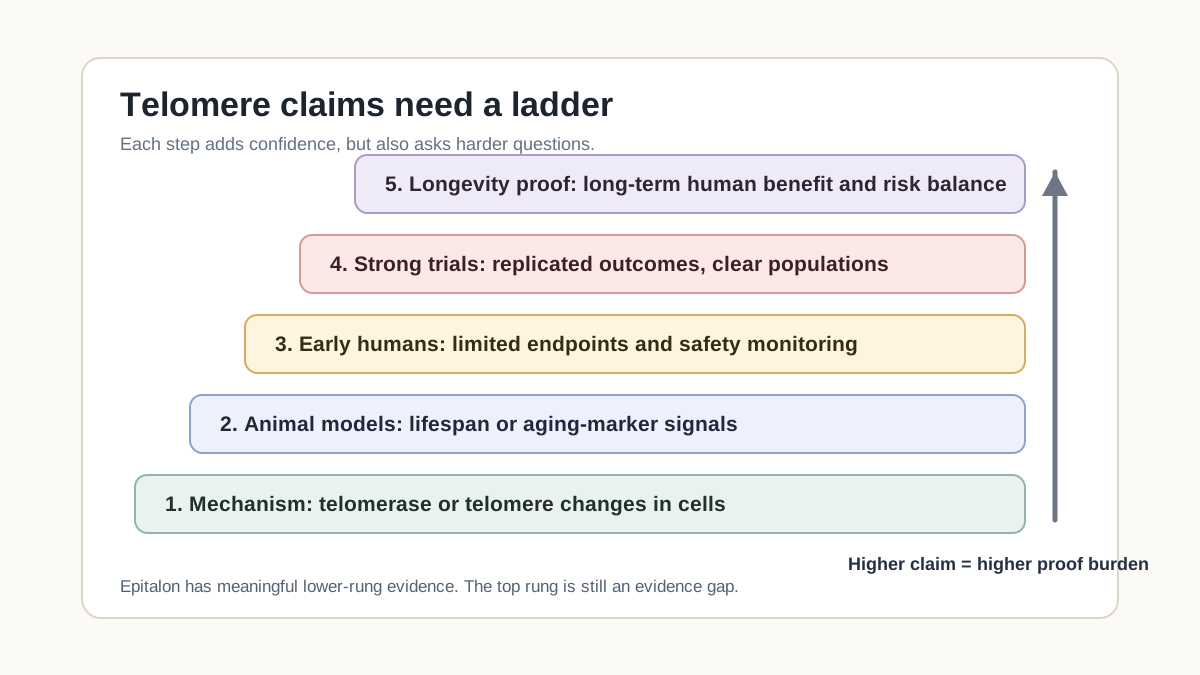
Quick answer: Epitalon has enough evidence to be an aging-biology research topic. It does not have the level of evidence needed to call it a proven longevity intervention.
Is Epitalon proven to extend human lifespan?
No. Epitalon is not proven to extend human lifespan.
This is the central distinction. A compound can influence telomerase in cells, affect biomarkers in animals, and appear in gerontology reviews without proving that it increases healthy human lifespan. Human longevity claims require long follow-up, meaningful endpoints, careful safety monitoring, and ideally independent replication.
The internet version often compresses the chain:
- Telomeres are related to aging.
- Epitalon may affect telomerase or telomeres.
- Therefore Epitalon extends life.
The first two points can be discussed cautiously. The third is not established.
Telomere biology is also not automatically risk-free. Telomerase is relevant to normal aging biology, but it is also relevant to cancer biology. That does not mean Epitalon causes cancer. It means confident claims about broad telomerase activation should be handled with adult supervision, which the internet famously keeps in a locked drawer.
What are Epitalon side effects and safety unknowns?
Epitalon side effects are not mapped well enough to justify confident safety claims for general use. The bigger issue is not a long proven list of adverse effects; it is the lack of large, modern, long-term human safety data.
Potential concern areas include:
- injection-site or route-related reactions if used in injectable contexts
- hypersensitivity or immune reactions
- product-quality, sterility, purity, or contamination problems outside regulated supply chains
- unknown risks in people with cancer history or cancer risk concerns
- unknown effects in pregnancy, breastfeeding, younger users, or medically complex people
- uncertain long-term effects of repeatedly altering aging-related signaling pathways
FDA compounding materials have also listed Epitalon among bulk drug substances that may present significant safety risks, noting peptide-related concerns such as potential aggregation, impurities, immunogenicity for certain routes, and lack of identified safety-related information for the proposed route of administration. That is not the same as saying every exposure is known to be dangerous. It is a regulatory warning that the safety file is incomplete.
For a broader framework, read Peptide side effects: what is known, unknown, and overstated.
Why this article does not include an Epitalon protocol
This article does not include an Epitalon protocol because protocol-style guidance would imply a level of clinical certainty that the evidence does not support.
Search demand often includes phrases like "epitalon protocol," "epitalon peptide benefits," and "epitalon side effects." Covering the topic responsibly means answering why protocol interest exists without turning an educational article into use instructions.
Protocol guidance would need to answer questions this evidence base does not cleanly settle for general readers:
- Who is an appropriate candidate?
- What endpoint is being targeted?
- What route and formulation are being evaluated?
- What monitoring is needed?
- What populations should be excluded?
- What long-term risks are acceptable?
- What product-quality controls exist?
Without those answers, a protocol section becomes confidence cosplay with a syringe.
How does Epitalon compare with MOTS-c?
Epitalon and MOTS-c both sit in the longevity-peptide conversation, but they are not interchangeable.
| Topic | Epitalon | MOTS-c | |---|---|---| | Main search theme | Telomeres, telomerase, pineal aging research | Mitochondrial signaling, metabolism, stress response | | Evidence center | Cell telomere studies, animal aging models, older human literature | Mitochondrial-derived peptide biology, preclinical metabolic work, emerging human investigation | | Common overclaim | "Lengthens telomeres, therefore extends life" | "Mitochondrial signal, therefore improves metabolism or longevity" | | Best cautious framing | Aging-biology research peptide with human evidence gaps | Mitochondrial research peptide with consumer evidence gaps |
The shared lesson is the same: longevity mechanisms are not longevity outcomes. For the companion profile, see What is MOTS-c?.
What should readers watch for in Epitalon claims?
Readers should be skeptical when Epitalon content treats mechanism, animal data, or older small studies as if they settle human use.
Red flags include:
- "proven anti-aging peptide"
- "guaranteed telomere extension"
- "safe because it is just a peptide"
- "no side effects"
- protocol instructions attached to product links
- disease-prevention or cancer-related claims
- confident lifespan numbers without modern human evidence
Better Epitalon content should say what kind of evidence is being discussed, what outcome was measured, whether it was a cell, animal, or human study, and what remains unknown.
For claim-checking habits, see How to evaluate peptide claims online and Peptide therapy explained.
Bottom line
Epitalon is one of the more interesting longevity-adjacent peptide topics because it has a real research trail around telomerase, telomeres, pineal biology, melatonin, antioxidant effects, and aging models.
It is not a proven human anti-aging treatment. It is not proven to extend human lifespan. Its safety profile is not mature enough for broad confident claims. Telomere biology is meaningful, but it is not a clean consumer switch labeled "live longer."
The evidence-aware view is simple: Epitalon belongs in research-status discussion, not in protocol hype.
FAQ
What is Epitalon peptide?
Epitalon is a synthetic tetrapeptide with the sequence Ala-Glu-Asp-Gly, also written AEDG. It is discussed in aging-biology research because of studies involving telomerase, telomeres, pineal signaling, melatonin, antioxidant pathways, and animal lifespan models.
What are Epitalon peptide benefits?
Claimed benefits usually include telomere support, longevity, sleep, melatonin regulation, antioxidant effects, and general anti-aging. A cautious reading is that these are research themes, not proven consumer outcomes.
Does Epitalon lengthen telomeres?
Some cell studies report telomerase activation or telomere-length effects. That does not prove that Epitalon safely lengthens telomeres in humans in a way that improves health or lifespan.
Is Epitalon proven for longevity?
No. Epitalon is not proven to extend human lifespan. Animal and cell findings are not enough to establish human longevity benefit.
What are Epitalon side effects?
Epitalon side effects are not well characterized in large, modern human studies. The main safety issue is uncertainty, including route-related reactions, immune concerns, product quality, and unknown long-term effects.
Is there an Epitalon protocol?
This article does not provide an Epitalon protocol. Protocol guidance would be inappropriate for an educational evidence overview because Epitalon does not have a mature, broadly validated human safety and efficacy base for longevity use.
Selected sources
- PubMed: Epithalon peptide induces telomerase activity and telomere elongation in human somatic cells
- PMC: Epitalon increases telomere length in human cell lines through telomerase upregulation or ALT activity
- PubMed: Effect of Epitalon on biomarkers of aging, life span and spontaneous tumor incidence in female Swiss-derived SHR mice
- PubMed: Effect of epitalon and melatonin on life span and spontaneous carcinogenesis in senescence accelerated mice
- PubMed/PMC review: Overview of Epitalon - Highly Bioactive Pineal Tetrapeptide with Promising Properties
- PubMed/PMC: Telomere length and aging-related outcomes in humans
- FDA: Certain Bulk Drug Substances for Use in Compounding that May Present Significant Safety Risks