What Is MOTS-c? The Mitochondrial Peptide People Are Searching For
MOTS-c is a mitochondrial-derived peptide discussed in metabolism, exercise, insulin-sensitivity, inflammation, and longevity research. It is interesting because it appears to act as a signal between mitochondria and the rest of the cell, including pathways involved in stress response and energy regulation. It is not, however, a proven anti-aging treatment, fat-loss peptide, energy shortcut, or self-use protocol.
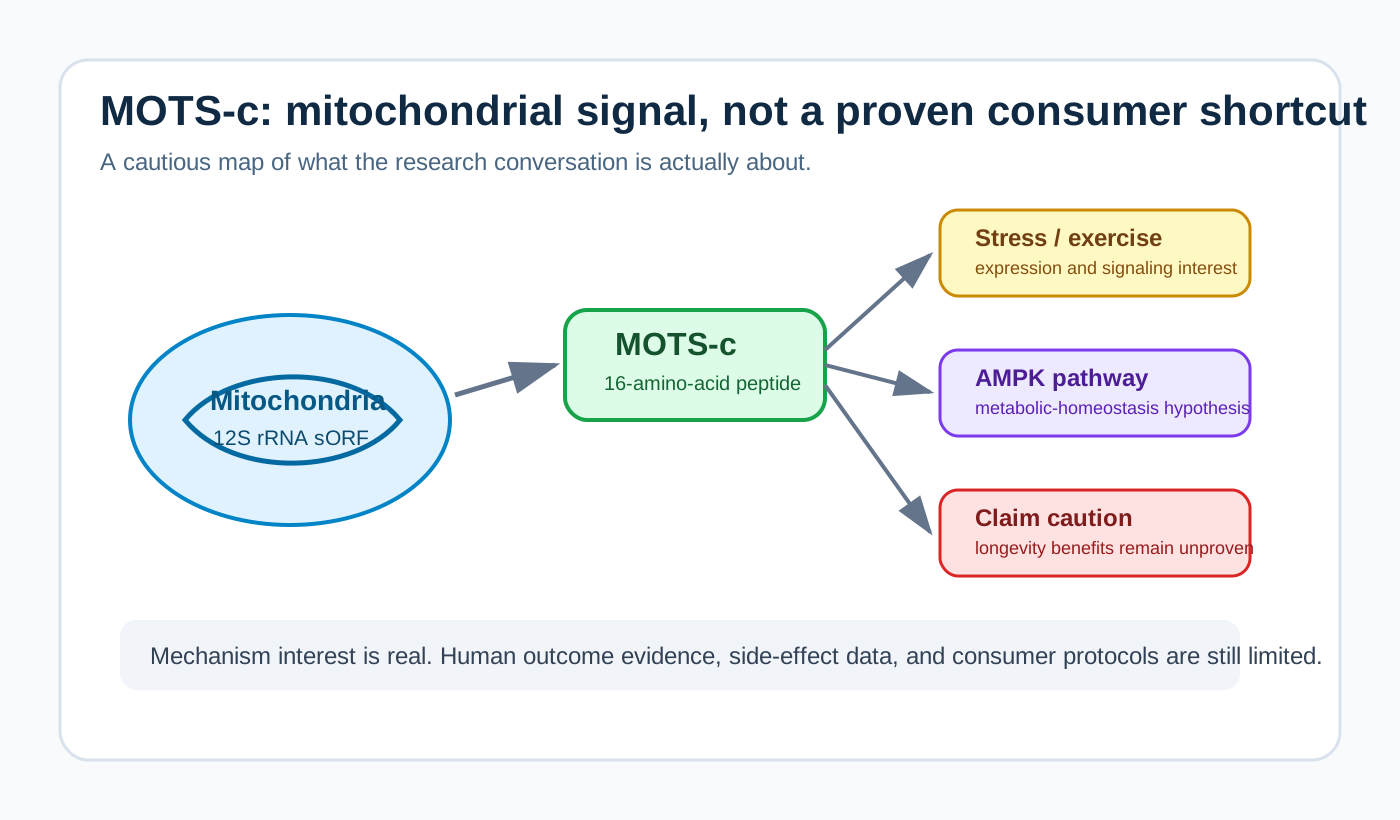
Quick answer: MOTS-c is a 16-amino-acid peptide encoded by a short open reading frame in mitochondrial 12S rRNA. Research connects it to mitochondrial-nuclear signaling, AMPK-related metabolism, stress adaptation, and insulin-resistance models. The strongest evidence is mechanistic and preclinical, with early human research still developing. Consumer claims about fat loss, endurance, longevity, or broad metabolic repair should be treated as speculative unless tied to controlled human outcome data.
This article is educational only. It does not provide dosing, injection guidance, sourcing advice, treatment recommendations, or instructions for using MOTS-c.
What is MOTS-c peptide?
MOTS-c stands for mitochondrial open reading frame of the 12S rRNA type-c. In plain English, it is a small peptide linked to mitochondrial DNA rather than the usual nuclear-DNA story people associate with most proteins.
That is why MOTS-c gets attention. Mitochondria are usually described as cellular energy producers, but they also send signals about stress, metabolism, inflammation, and cellular adaptation. MOTS-c sits in that signaling conversation.
The key point is that MOTS-c is not just another generic "peptide therapy" buzzword. It belongs to a research category called mitochondrial-derived peptides, alongside names such as humanin and small humanin-like peptides. These peptides are studied because they may help explain how mitochondria communicate with cells and tissues under stress.
For readers trying to separate real science from marketing, the clean definition is this: MOTS-c is an endogenous mitochondrial-derived peptide being studied for metabolic and stress-response signaling, not an established consumer treatment.
Why are people searching for MOTS-c?
People search for MOTS-c because it sounds like it touches several high-interest topics at once: metabolism, insulin sensitivity, exercise, mitochondria, inflammation, and aging. That combination is catnip for longevity marketing.
The more defensible reason to pay attention is narrower. MOTS-c has been studied as a signaling peptide that may influence energy homeostasis and stress adaptation. Reviews describe links to the folate-AICAR-AMPK pathway, nuclear translocation during stress, metabolic regulation, and aging-related research questions.
The less defensible internet leap is: "MOTS-c affects metabolism, therefore it is a fat-loss peptide" or "MOTS-c is linked to aging biology, therefore it is an anti-aging treatment." Those claims move faster than the evidence.
A useful way to read MOTS-c content is to ask three questions:
- Is the claim based on a mechanism, animal study, biomarker, or controlled human outcome?
- Is the article describing endogenous MOTS-c biology or exogenous MOTS-c use?
- Is the writer quietly turning research interest into usage advice?
That last move is where a lot of peptide content goes off the rails.
How does MOTS-c work in simple terms?
MOTS-c is discussed as a mitochondrial-to-nuclear signal. Under certain stress conditions, research suggests MOTS-c can translocate toward the nucleus and influence expression of genes involved in stress adaptation.
The pathway most often mentioned is the folate-AICAR-AMPK axis. AMPK is a major cellular energy-sensing pathway, which is why MOTS-c gets pulled into conversations about glucose metabolism, insulin sensitivity, exercise adaptation, and metabolic stress.
That mechanism is biologically interesting, but it needs careful interpretation. Activating or interacting with a pathway does not automatically predict a clinical result. AMPK is involved in many processes, and pathway diagrams are not treatment outcomes.
A fair mechanism summary looks like this:
- MOTS-c is encoded by mitochondrial DNA and translated as a small peptide.
- It is studied as part of mitochondrial retrograde signaling, meaning mitochondria influencing nuclear gene expression.
- It has been connected to stress response, AMPK-related energy regulation, and metabolic-homeostasis models.
- The mechanism helps explain why researchers are interested, but it does not prove consumer benefit claims.
For more on reading mechanism claims without overinterpreting them, see the PeptideBase guide to peptide research status.
What benefits are claimed for MOTS-c?
MOTS-c benefits are commonly claimed around metabolism, insulin sensitivity, exercise performance, body composition, inflammation, mitochondrial function, and longevity. Some of those categories are reasonable research themes. Many consumer claims are still too strong.
Here is the practical split:
| Claim area | More cautious interpretation | |---|---| | Insulin sensitivity | A legitimate research area, including preclinical work and emerging human clinical investigation | | Weight or fat loss | Often overstated; metabolic signaling does not equal proven fat-loss treatment | | Exercise capacity | Plausible research interest, but not proof of endurance enhancement for consumers | | Longevity | Mechanistically interesting but highly speculative as a real-world human outcome | | Inflammation | Studied in experimental models, not a reason to claim disease treatment | | Energy | Anecdotal reports are not the same as controlled evidence |
The best wording is "MOTS-c is being studied for metabolic and stress-response biology." The worst wording is "MOTS-c fixes metabolism" or "MOTS-c is the anti-aging peptide." Biology is not that tidy. Marketing departments keep trying anyway. Bless their tiny lab-coat hearts.
What does the evidence actually show?
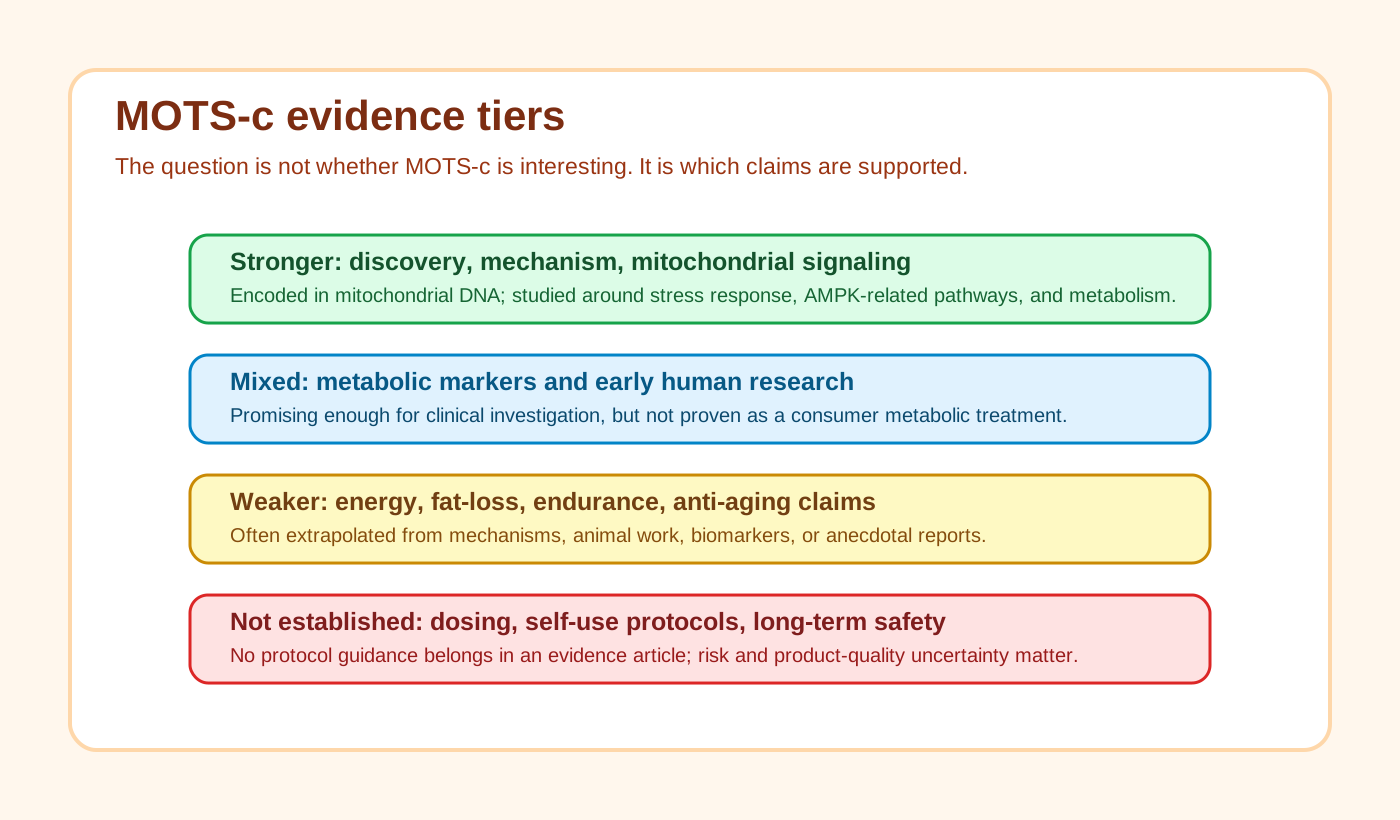
The MOTS-c evidence base is real but uneven. It is strongest at the level of discovery, mechanism, animal research, and biological plausibility. It is weaker where consumer content often wants certainty: weight loss, visible energy changes, longevity outcomes, long-term safety, and practical use.
Reviews describe MOTS-c as encoded by mitochondrial 12S rRNA and involved in stress-response signaling, AMPK-related metabolism, insulin-resistance models, inflammation, and aging-related research. Preclinical studies are a major part of that foundation.
A recent registered human study, NCT07505745, is recruiting adults with prediabetes and overweight or obesity to evaluate whether investigational MOTS-c improves insulin sensitivity compared with placebo. That is useful context because it shows serious clinical interest. It does not mean the outcome is already proven; the study is recruiting and results are not yet available.
MOTS-c is also being tested outside metabolism; our review of the preclinical MOTS-c host-defense study explains why antibacterial results in cells and mice do not establish a human anti-infective use.
A systematic review and meta-analysis has also examined circulating mitochondrial-derived peptides, including MOTS-c, across metabolic states. That kind of evidence can help describe associations, but association is not the same as proof that taking a peptide changes outcomes safely.
Is MOTS-c proven for longevity or anti-aging?
MOTS-c is not proven as a human longevity or anti-aging treatment. It is studied in aging-adjacent biology because mitochondria, stress response, metabolism, inflammation, and physical function all overlap with aging research.
That overlap is enough to justify careful scientific interest. It is not enough to justify strong consumer claims.
The aging claim usually rests on a chain of reasoning:
- Mitochondria are important in aging biology.
- MOTS-c is a mitochondrial-derived peptide.
- MOTS-c appears involved in stress and metabolic signaling.
- Therefore MOTS-c may be relevant to healthy-aging research.
The first three points are reasonable. The fourth is a research hypothesis, not a consumer promise. A longevity claim needs long-term human data, meaningful endpoints, safety monitoring, and comparison against simpler interventions such as exercise, sleep, nutrition, weight management, and standard medical care.
If a page makes MOTS-c sound like a shortcut around basic metabolic health, it is selling confidence the evidence has not earned.
What are the possible side effects of MOTS-c?
Public side-effect certainty for MOTS-c is limited because broad consumer use is ahead of the mature clinical evidence base. The safest answer is that side effects and long-term risks are not well characterized for general self-directed use.
Possible concern areas include:
- injection-site reactions if used in injectable contexts
- hypersensitivity or formulation-related reactions
- unknown effects in people with complex metabolic, cardiovascular, liver, kidney, endocrine, immune, or cancer histories
- uncertainty around pregnancy, breastfeeding, and younger users
- unknown long-term effects of altering metabolic signaling pathways
- product-quality and contamination risks in gray-market settings
This does not mean MOTS-c is known to be highly dangerous. It means the safety conversation is incomplete. "Endogenous" does not mean "safe at any exposure, route, dose, or product quality." Your body also makes stomach acid; that does not mean you should freelance with a squeeze bottle.
For a broader framework, read peptide side effects: known, unknown, and overstated.
Is MOTS-c FDA approved or regulated?
MOTS-c should not be described as an FDA-approved treatment. The FDA has general rules around bulk drug substances used in compounding, and peptide-related compounding rules can change over time. A peptide being discussed online, sold as a research chemical, or mentioned by a clinic does not mean it has been reviewed and approved as a drug for the claims being made.
The practical reader takeaway is simple: do not infer legality, quality, approval, or safety from peptide marketing. Regulatory status can depend on jurisdiction, route, intended use, labeling, compounding context, and whether the substance is part of an approved product or an evaluated bulk-drug-substance pathway.
This article does not provide sourcing guidance, purchasing guidance, clinic selection advice, or instructions for obtaining MOTS-c.
How does MOTS-c compare with other mitochondrial peptides?
MOTS-c is usually compared with humanin, SHLPs, and sometimes SS-31 because all appear in mitochondrial-health or mitochondrial-signaling conversations. The comparison is useful only if it stays high level.
| Topic | MOTS-c | Humanin / SHLPs | SS-31-style discussions | |---|---|---|---| | Main frame | Mitochondrial-derived peptide signaling | Mitochondrial-derived peptide family | Mitochondrial-targeted peptide research, not the same category as MOTS-c | | Common claim area | Metabolism, stress response, exercise, aging | Cell survival, metabolic and neurobiology discussions | Mitochondrial function and oxidative-stress-related research | | Evidence caution | Human outcome evidence is still developing | Depends heavily on peptide and claim | Do not treat as interchangeable with MOTS-c |
The important point: mitochondrial peptides are not interchangeable just because the word mitochondria appears in the sentence. Different molecules, pathways, study models, and claims need separate evidence reviews.
Who should be especially cautious?
People with metabolic disease, diabetes, cardiovascular disease, cancer history, immune conditions, endocrine disorders, liver or kidney disease, pregnancy or breastfeeding considerations, medication use, or a history of reactions to peptide products should be especially cautious.
That caution is not a personalized medical rule. It is a reminder that MOTS-c sits near systems that matter: metabolism, inflammation, stress response, and cellular signaling. Those systems do not exist in isolation.
Anyone trying to interpret MOTS-c claims should also be cautious if the content includes:
- exact dosing instructions
- before-and-after promises
- claims of guaranteed fat loss or energy
- "research-backed" language without human outcome data
- no discussion of side effects or uncertainty
- product links mixed into evidence claims
For claim-checking, use the PeptideBase guide on how to evaluate peptide claims online.
Bottom line
MOTS-c is one of the more interesting mitochondrial peptide topics because it connects mitochondrial DNA, stress signaling, AMPK-related metabolism, exercise response, insulin-resistance research, and aging-adjacent biology. That makes it worth understanding.
It does not make MOTS-c a proven longevity treatment, metabolic fix, fat-loss shortcut, or energy peptide. The evidence is promising in places, early in others, and highly speculative when translated into consumer claims.
The best way to read MOTS-c content is evidence-first: mechanism is not outcome proof, animal data is not clinical certainty, a recruiting trial is not a completed result, and online protocols are not medical guidance.
FAQ
What is MOTS-c peptide?
MOTS-c is a mitochondrial-derived peptide encoded by a short open reading frame in mitochondrial 12S rRNA. It is studied for stress-response signaling, AMPK-related metabolism, insulin-sensitivity models, exercise response, and aging-adjacent biology.
What are MOTS-c benefits?
Claimed MOTS-c benefits usually involve metabolism, insulin sensitivity, exercise, inflammation, energy, and longevity. The cautious version is that MOTS-c is being studied in these areas; many consumer benefit claims remain unproven.
Is MOTS-c a weight-loss peptide?
MOTS-c should not be treated as a proven weight-loss peptide. Metabolic signaling and preclinical obesity or insulin-resistance models do not automatically establish safe, meaningful fat-loss outcomes in humans.
Is MOTS-c safe?
MOTS-c safety is not fully characterized for general consumer use. Side-effect uncertainty, route, product quality, medical history, and long-term effects all matter. This article does not provide use instructions.
Is MOTS-c FDA approved?
MOTS-c should not be described as an FDA-approved treatment for metabolic health, longevity, weight loss, or any disease. Regulatory status and compounding rules are separate from online marketing claims and can change.
Does MOTS-c work like exercise?
MOTS-c is connected to exercise and stress-response research, but it should not be described as exercise in a vial. Exercise affects many systems at once; a peptide pathway discussion does not replace the broader effects of training.