CagriSema Explained: Semaglutide, Cagrilintide, and the Amylin + GLP-1 Strategy

CagriSema is an investigational fixed-dose combination of semaglutide and cagrilintide being studied by Novo Nordisk for obesity, overweight, and related metabolic outcomes. The simple idea is that semaglutide works through the GLP-1 receptor pathway, while cagrilintide is a long-acting amylin analogue. Those are related appetite and metabolic systems, but they are not the same mechanism.
That distinction is the whole point. CagriSema is not just "stronger semaglutide" and it is not a generic peptide stack. It is a specific combination drug candidate designed to pair two hormone-signal strategies: GLP-1 biology and amylin biology.
Educational note: This article is for general peptide education only. It is not medical advice, treatment guidance, dosing guidance, sourcing guidance, purchasing guidance, or a recommendation to use CagriSema, semaglutide, cagrilintide, or any related product.
Quick Facts About CagriSema
CagriSema combines two components. It pairs semaglutide, a GLP-1 receptor agonist, with cagrilintide, a long-acting amylin analogue.
The strategy is complementary signaling. GLP-1 and amylin both relate to appetite and metabolic regulation, but they work through different receptor systems and physiologic roles.
The evidence is strongest for the studied product and populations. Phase 3 REDEFINE trials reported greater average weight loss with CagriSema than placebo and, in REDEFINE 1, greater loss than either component alone. Those results should not be generalized to unapproved products, research chemicals, or DIY combinations.
Regulatory status matters. As of June 6, 2026, Novo Nordisk has submitted a U.S. FDA New Drug Application for CagriSema, but Novo states that CagriSema is not approved in the U.S. or EU.
This is not sourcing or protocol guidance. Search interest around CagriSema often drifts into product-access or self-combination territory. That is exactly where the evidence and safety conversation gets worse.
What Is CagriSema?
CagriSema is an investigational combination of semaglutide and cagrilintide. Semaglutide is the GLP-1 receptor agonist also known from approved products such as Ozempic and Wegovy. Cagrilintide is a long-acting amylin analogue that has been studied as a partner to semaglutide.
The combination is being evaluated as a single drug candidate, not as a casual pairing of two separate products. That matters because clinical trial data, regulatory review, safety monitoring, and product quality attach to the specific studied product, not to every online use of the words "semaglutide" and "cagrilintide."
Answer block: What is CagriSema?
CagriSema is Novo Nordisk's investigational semaglutide-plus-cagrilintide combination. It is designed to combine GLP-1 receptor agonism with amylin analogue signaling, mainly in obesity and metabolic-disease research programs.
Why Combine Semaglutide With Cagrilintide?
The reason to combine semaglutide with cagrilintide is that GLP-1 and amylin signals overlap in outcome interest but differ in mechanism. Both are connected to appetite regulation, satiety, food intake, and metabolic control, but they do not simply duplicate each other.
Semaglutide acts through the GLP-1 receptor pathway. In approved semaglutide products, that pathway is associated with glucose-dependent insulin secretion, reduced glucagon signaling, slowed gastric emptying, and appetite-related effects. The exact label and indication depend on the approved product, not just the molecule name.
Cagrilintide is built around amylin biology. Amylin is a hormone co-secreted with insulin by pancreatic beta cells. It is involved in satiety signaling, gastric-emptying regulation, and post-meal glucose dynamics. A long-acting amylin analogue is meant to extend that type of signaling in a drug-development context.
The combination thesis is not mysterious: use two different satiety and metabolic pathways instead of relying on one pathway alone.
GLP-1 vs Amylin: The Mechanism Difference
GLP-1 and amylin are both meal-related hormone systems, but they answer different biological questions.
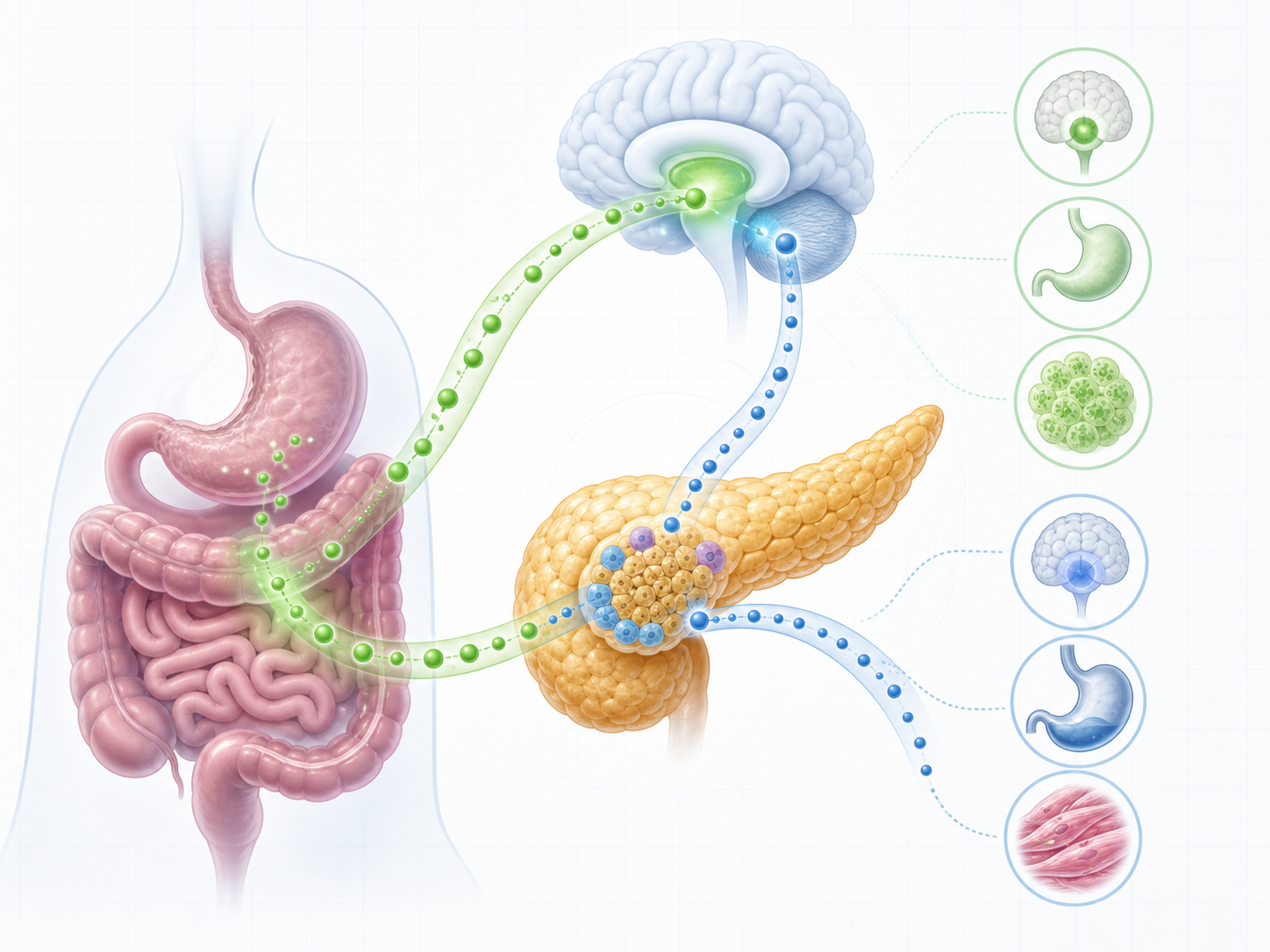
CagriSema is best understood as a dual-pathway strategy: semaglutide contributes GLP-1 receptor signaling, while cagrilintide contributes amylin-analogue signaling.
| Pathway | Component in CagriSema | Simplified role | Why it matters | |---|---|---|---| | GLP-1 receptor signaling | Semaglutide | Incretin and appetite-related signaling | Helps explain why semaglutide became central to modern obesity and diabetes drug development | | Amylin analogue signaling | Cagrilintide | Satiety, meal-related signaling, gastric-emptying context | Adds a different appetite-regulation pathway rather than just increasing GLP-1 exposure | | Combination strategy | CagriSema | Parallel pathway targeting | Tests whether complementary signals can produce stronger outcomes than either component alone |
This is where a lot of online explanations get sloppy. "GLP-1 plus amylin" does not mean two interchangeable appetite drugs thrown together. It means two hormone systems with different receptor biology, different development histories, and different evidence boundaries.
Answer block: Is CagriSema a GLP-1?
CagriSema includes a GLP-1 receptor agonist component, semaglutide, but the combination also includes cagrilintide, an amylin analogue. Calling it only a GLP-1 leaves out half of the strategy.
What the REDEFINE Evidence Shows
The most important public evidence for CagriSema comes from the REDEFINE phase 3 program. REDEFINE 1 studied adults with obesity or overweight with at least one obesity-related complication and without diabetes. REDEFINE 2 studied adults with type 2 diabetes and obesity or overweight.
In REDEFINE 1, published results reported substantially greater average body-weight reduction with CagriSema than placebo, and greater reduction than semaglutide alone or cagrilintide alone in the trial setting. In REDEFINE 2, CagriSema also showed greater average weight reduction than placebo in adults with type 2 diabetes, along with glycemic improvements.
That is a meaningful evidence signal, but the boundaries are just as important as the headline:
- The data apply to the studied trial product and trial populations.
- Trial conditions included protocol-defined monitoring and lifestyle intervention.
- Average results do not predict any one person's outcome.
- Safety and tolerability are part of the evidence, not an afterthought.
- Trial evidence does not validate unapproved products sold with similar names.
The adverse-event profile reported in public summaries was largely gastrointestinal, consistent with the underlying pharmacology. That matters because a stronger effect story can come with a stronger tolerability conversation. Good peptide education does not separate efficacy headlines from side-effect reality.
Our GLP-1 side-effects evidence guide explains why trial adverse-event tables, product labels, postmarketing reports, and online anecdotes should not be treated as interchangeable evidence.
What Remains Unknown
CagriSema has late-stage clinical evidence, but several questions remain open until regulatory review, labeling, post-approval data if approved, and longer-term real-world evidence clarify them.
Important unknowns include:
- how regulators will evaluate the full benefit-risk package
- what the final approved indication, label, warnings, and patient population would be if approved
- how long-term tolerability looks outside trial settings
- how discontinuation, maintenance, regain, and adherence issues play out over time
- how CagriSema compares with other emerging obesity medicines in head-to-head or real-world contexts
- whether the combination's added effect is worth added complexity for different patient groups
Those are not small footnotes. They are the difference between "promising trial result" and "settled clinical place."
Answer block: Is CagriSema approved?
As of June 6, 2026, CagriSema is not approved in the U.S. or EU according to Novo Nordisk's public FDA-submission announcement. Novo submitted a U.S. New Drug Application in December 2025, and FDA review was expected in 2026.
Common Misconceptions About CagriSema
The first misconception is that CagriSema is just semaglutide with a booster. That misses the amylin side of the design. Cagrilintide is not there as a branding accessory; it represents a different hormone-signaling strategy.
The second misconception is that trial results validate homemade or research-market combinations. They do not. The evidence belongs to a specific investigational product, under specific trial conditions, with specific monitoring. It does not automatically transfer to separately sourced ingredients or non-reviewed products.
The third misconception is that "amylin" means the same thing as pramlintide, cagrilintide, or every amylin-related compound. The pathway is shared conceptually, but each molecule has its own structure, duration, evidence base, and regulatory status.
The fourth misconception is that a stronger average weight-loss result automatically means a better choice for every person. That is drug-selection thinking, and this article is not doing that. Benefit-risk decisions belong in clinician-guided care, not SEO articles or marketplace hype.
How CagriSema Fits the Peptide Landscape
CagriSema sits at the intersection of regulated metabolic medicines and peptide-language marketing. Semaglutide is peptide-based. Cagrilintide is an amylin analogue. But the useful question is not "is it a peptide?" The useful question is what evidence and regulatory status apply.
That is the same distinction covered in PeptideBase's GLP-1 peptides vs research peptides guide. A molecule can be peptide-related and still require careful separation between approved products, investigational products, compounded preparations, and research-only marketing.
For evidence literacy, see peptide research status explained and what preclinical actually means. For risk framing, the broader peptide side effects guide is the better starting point than social-media claims.
Bottom Line
CagriSema is best understood as an investigational amylin-plus-GLP-1 combination, not as a generic peptide stack and not as merely "stronger semaglutide." Semaglutide contributes GLP-1 receptor agonism. Cagrilintide contributes long-acting amylin-analogue signaling. The development strategy is to test whether those complementary pathways can produce stronger metabolic outcomes than either approach alone.
The evidence is promising enough to matter, but the boundaries matter too. CagriSema remains unapproved in the U.S. and EU as of June 6, 2026, and the published trial evidence should not be stretched into dosing advice, drug-selection advice, clinic recommendations, or validation of unapproved products.
The clean takeaway is this: CagriSema is a specific investigational combination with a specific evidence package. The amylin + GLP-1 idea is the mechanism story, but regulatory review and product-specific data are what determine what can responsibly be claimed.