What Is BPC-157?
BPC-157 is a synthetic version of a short peptide sequence associated with a gastric protein fragment. It is commonly discussed online for injury recovery, tendon and ligament healing, gut protection, inflammation, and tissue repair. The important catch is that most supportive evidence comes from animal studies, cell studies, and mechanistic research rather than large, well-controlled human clinical trials.
That makes BPC-157 interesting, but not settled. It is one of those compounds where the internet often talks as if the case is closed, while the actual evidence is still more cautious: promising preclinical signals, limited human confirmation, and important regulatory and quality-control questions.
This article explains what BPC-157 is, why people talk about it, what the evidence suggests, where the evidence is weak, and what safety/regulatory issues readers should understand before treating it like a proven therapy.
Educational note: This article is for general information only. It is not medical advice, diagnosis, treatment guidance, or a recommendation to use BPC-157. Peptides can carry real risks, and regulatory status varies by country and context. Speak with a qualified healthcare professional before making health decisions.
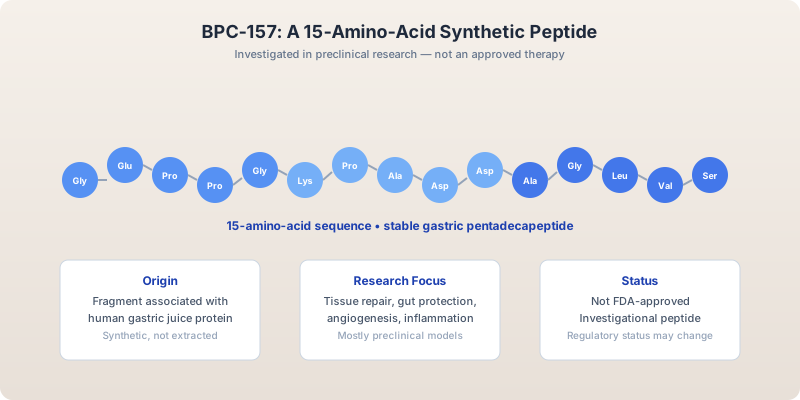
Quick answer: what is BPC-157?
BPC-157 stands for Body Protection Compound-157. It is a 15-amino-acid peptide, often described as a stable gastric pentadecapeptide. A 2025 literature and patent review describes BPC-157 as a peptide originally isolated from human gastric juice and studied across many preclinical models involving tissue injury, inflammatory bowel disease, and central nervous system disorders.[^review]
In plain English: BPC-157 is a small protein-like molecule that researchers have explored for protective and repair-related effects, especially in animal models.
The common discussion around BPC-157 focuses on:
- tendon, ligament, and muscle injury models
- wound healing and tissue repair
- gut lining and gastric protection research
- inflammation-related models
- interactions with nitric oxide, blood vessel formation, and repair signaling
- possible neuroprotective or brain-gut-axis effects
But "studied for" is not the same as "proven to treat." For most popular uses, especially musculoskeletal recovery, human evidence remains limited.
Why is BPC-157 so popular?
BPC-157 became popular because it sits at the intersection of three high-demand topics: injury recovery, gut health, and longevity-style peptide therapy. Athletes, biohackers, and recovery-focused clinics often discuss it because preclinical studies have reported effects related to tendon healing, ligament repair, wound closure, angiogenesis, and protection against certain types of tissue stress.
That sounds compelling. If someone has a nagging tendon injury or gut issue, a compound described as "body protection" is naturally going to get attention.
The problem is that popularity has moved faster than clinical proof. Many claims online flatten the evidence into something too certain, such as "BPC-157 heals injuries" or "BPC-157 repairs the gut." A more accurate version is:
BPC-157 has shown repair-related and protective effects in many experimental models, but it has not been established as a standard FDA-approved treatment for human injury recovery, gut disease, or chronic pain.
That distinction matters.
How is BPC-157 thought to work?
Researchers have proposed several overlapping mechanisms for BPC-157. None should be treated as a complete explanation, but they help explain why the peptide has attracted attention.
1. Tissue repair signaling
In musculoskeletal models, BPC-157 has been studied in relation to tendon, ligament, muscle, and wound healing. A musculoskeletal narrative review summarizes proposed pathways involving VEGFR2, nitric oxide signaling, angiogenesis, fibroblast activity, and neuromuscular stabilization.[^springer]
That means researchers are not only asking whether tissue changes occur; they are also exploring biological pathways that may help explain those changes.
2. Blood vessel and nitric oxide effects
Several discussions of BPC-157 focus on angiogenesis, or the formation of new blood vessels. Tissue repair often requires blood flow, oxygen, and nutrient delivery. BPC-157 has also been discussed in connection with nitric oxide pathways, which are involved in vascular tone and repair signaling.
This does not mean BPC-157 "improves circulation" in a general consumer-health sense. It means certain experimental models suggest it may interact with systems involved in vascular repair and tissue protection.
3. Gut protection and gastric origin
Because BPC-157 is associated with gastric juice and digestive-system protection, it is often discussed for gut health. The research history includes gastric and intestinal injury models, NSAID-related injury models, and inflammatory bowel disease models.[^review]
Again, the careful wording is important: these are research contexts, not proof that BPC-157 treats human digestive disease.
4. Inflammation and stress-response models
Some preclinical work explores BPC-157 in inflammatory, toxic, traumatic, or neurologic stress models. This is part of why review articles use broad language like "multifunctionality." Broad activity in models can be scientifically interesting, but it can also make consumer claims sloppy if every possible pathway becomes a marketing promise.
What is BPC-157 commonly discussed for?
BPC-157 is most commonly discussed for recovery-oriented use cases. The main ones are below, along with the more cautious evidence framing.
Tendon and ligament recovery
This is probably the most common use case online. BPC-157 has been studied in tendon and ligament models, including animal research related to Achilles tendon and ligament healing. The direction of the preclinical evidence is one reason it appears so often in sports-medicine peptide conversations.
However, a person reading about BPC-157 for tendon recovery should understand the gap: animal tendon healing is not the same as a proven human therapy. Human injuries vary by tissue, severity, loading, rehab quality, nutrition, age, medications, and underlying health conditions.
Muscle injury and wound healing
BPC-157 is also discussed for muscle recovery and wound healing. Preclinical models have reported repair-related effects, and some proposed mechanisms overlap with blood vessel formation, fibroblast activity, and inflammatory response.
The honest takeaway: BPC-157 is biologically plausible enough to study further, but the available evidence does not justify treating it as a guaranteed recovery shortcut.
Gut protection
Because of its gastric origin and digestive-system research, BPC-157 is often discussed for gut lining protection, ulcers, inflammatory bowel disease, and NSAID-related stress. Some animal and mechanistic studies are relevant here.
But for real digestive disease, human diagnosis and treatment are not optional details. Symptoms such as bleeding, persistent pain, severe reflux, unexplained weight loss, or bowel changes require proper medical evaluation. A peptide discussion should not replace that.
Joint pain and general inflammation
BPC-157 sometimes gets grouped into joint-pain or anti-inflammatory conversations. This is a broader and weaker claim category. "Inflammation" is not one thing, and joint pain can come from mechanical damage, autoimmune disease, infection, degeneration, overuse, or referred pain.
If a claim sounds like BPC-157 is a universal anti-inflammatory repair molecule, assume the claim is overstated.
What does the evidence actually show?
The evidence picture is mixed in a very specific way: preclinical evidence is extensive and interesting; human clinical evidence is comparatively thin.
A 2026 retrospective review of 1,039 documented BPC-157 users shows that use is rising, but incomplete notes, co-treatments, and the absence of a control group mean it cannot establish efficacy or safety.
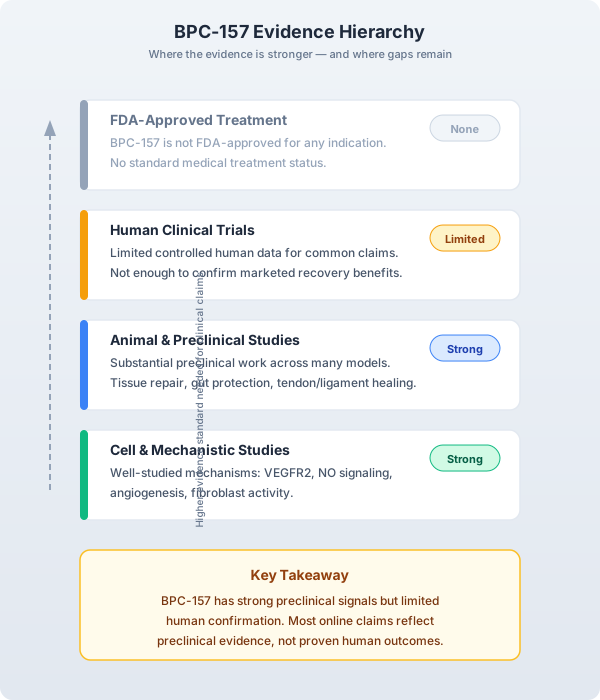
A 2025 review in Pharmaceuticals describes BPC-157 as having beneficial effects across multiple preclinical models and notes a desirable safety profile in the literature, while also stating that it has not been approved for standard medical use by the FDA or other global authorities because sufficient comprehensive human clinical studies are lacking.[^review]
That is probably the most balanced summary:
- There is enough preclinical research to justify scientific interest.
- There is not enough human evidence to treat common online claims as proven.
- Regulatory authorities have not approved BPC-157 as a standard medicine.
- Product quality and sourcing remain major practical concerns outside regulated drug channels.
Evidence strength by claim type
| Claim area | Evidence strength | Practical interpretation | |---|---:|---| | Animal tissue repair models | Moderate preclinical | Interesting and repeated enough to study further | | Human tendon/ligament recovery | Weak/limited | Not established as a proven therapy | | Gut protection models | Moderate preclinical | Plausible research area, not a self-treatment conclusion | | General "heals injuries" claims | Weak as stated | Too broad and too certain | | Long-term safety in humans | Limited | Not well established across populations and use patterns |
Is BPC-157 FDA-approved?
No. BPC-157 is not FDA-approved as a standard treatment for injury recovery, gut disease, pain, or any other common wellness use.
The FDA also maintains information about bulk drug substances used in compounding that may present significant safety risks under sections 503A and 503B of the Federal Food, Drug, and Cosmetic Act.[^fda] Peptide compounding rules and categories can change, so readers should be careful with outdated claims about legality or availability.
The safest general statement is this:
BPC-157 should not be treated as an FDA-approved medication, and its legal/compounding status can be complex and subject to change.
Is BPC-157 safe?
The best answer is: not enough is known to make broad safety promises for human use. A dedicated review of BPC-157 side effects and unknowns explains why limited human data cannot support confident long-term safety claims.
Some reviews describe a relatively favorable safety profile in available studies, especially preclinical toxicology work, but that is not the same as proving long-term safety in diverse human populations. Safety depends on dose, route, formulation, sterility, purity, frequency, medical history, medications, and the condition being treated.
Important safety uncertainties include:
- limited large-scale human trial data
- unknown long-term risk profile
- product purity and contamination risks from unregulated suppliers
- injection-related risks such as infection, irritation, improper technique, or dosing errors
- unknown effects in pregnancy, cancer history, autoimmune disease, clotting disorders, or complex medical conditions
- interaction uncertainty with medications or other peptides
The quality-control issue deserves special attention. A lab peptide sold online is not the same thing as an approved pharmaceutical product with standardized manufacturing, labeling, dosing, safety monitoring, and adverse-event reporting.
BPC-157 oral vs injectable: what should readers know?
BPC-157 is discussed in oral and injectable forms. Online claims often imply that one route is clearly superior for certain conditions, but route-specific human evidence is not strong enough for simple consumer rules.
General considerations:
- Oral discussion often centers on gut-related uses, partly because of BPC-157's gastric research history.
- Injectable discussion often centers on localized injury or systemic recovery claims.
- Both routes raise questions about dose, quality, formulation, and evidence.
- Injection adds practical risks that oral use does not, including sterility and technique issues.
This article does not provide dosing or protocol advice. That is intentional. BPC-157 is not an approved standard therapy, and dosing advice online often runs ahead of clinical evidence.
Who should be especially cautious?
Everyone should be cautious with unapproved peptides, but extra caution is warranted for people who:
- are pregnant, trying to conceive, or breastfeeding
- have cancer or a history of cancer
- have autoimmune or inflammatory disease
- have bleeding, clotting, cardiovascular, liver, or kidney concerns
- take prescription medications
- are considering injections without medical supervision
- are subject to sport anti-doping rules
- are buying products from non-regulated online vendors
BPC-157 has had anti-doping attention in the past, and regulatory status can differ by organization and year. Athletes should check current rules directly with their governing body rather than relying on old blog posts.
How to read BPC-157 claims online
A useful filter is to separate four kinds of statements:
- Mechanistic claim: "BPC-157 may interact with nitric oxide or angiogenesis pathways."
- Animal-model claim: "BPC-157 improved healing markers in a rat tendon model."
- Human clinical claim: "BPC-157 improves recovery in people with a specific injury."
- Marketing claim: "BPC-157 heals injuries fast."
The first two can be scientifically interesting. The third requires strong human evidence. The fourth is usually too broad.
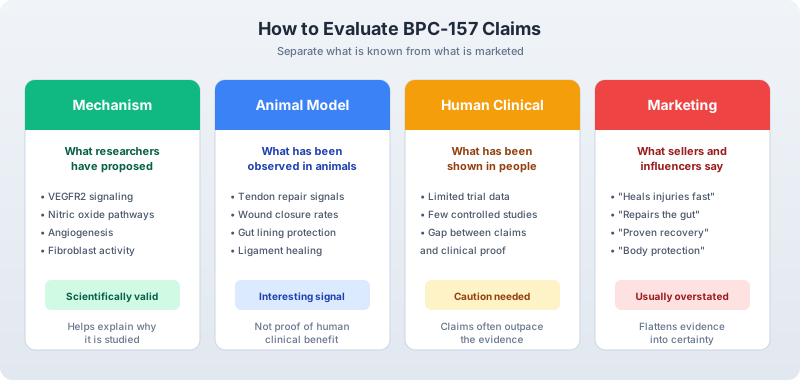
A trustworthy BPC-157 article should make the evidence level obvious. If every claim sounds equally certain, that is a red flag.
Bottom line
BPC-157 is a synthetic 15-amino-acid peptide widely discussed for tissue repair, tendon and ligament recovery, wound healing, and gut protection. The research is interesting, especially in preclinical models, and proposed mechanisms include repair signaling, angiogenesis, nitric oxide pathways, and gastrointestinal protection.
But the human evidence is still limited, BPC-157 is not FDA-approved as a standard medical treatment, and real-world use raises quality, dosing, legal, and safety questions. The most accurate view is neither "miracle healing peptide" nor "worthless hype." BPC-157 is a biologically interesting compound with promising preclinical signals and an evidence gap that matters.
For readers, the practical takeaway is simple: treat BPC-157 as an investigational peptide topic, not a proven recovery solution.
FAQ
What is BPC-157 in simple terms?
BPC-157 is a synthetic peptide made of 15 amino acids. It is commonly discussed for tissue repair and gut-protection research, but most evidence comes from animal and lab studies rather than strong human clinical trials.
Is BPC-157 proven to heal injuries?
No. BPC-157 has shown repair-related effects in preclinical models, but it is not proven as a standard human treatment for tendon, ligament, muscle, or joint injuries.
Is BPC-157 FDA-approved?
No. BPC-157 is not FDA-approved as a standard medication for injury recovery, gut disease, pain, or wellness use.
Is BPC-157 safe long term?
Long-term human safety is not well established. Safety claims should be treated cautiously, especially for injectable products or products from unregulated suppliers.
Why do people use BPC-157?
People are usually interested in BPC-157 because of its reputation in recovery, tendon/ligament healing, wound repair, and gut-health discussions. Those interests are based mostly on preclinical research and anecdotal use, not definitive clinical proof.
[^review]: Multifunctionality and Possible Medical Application of the BPC 157 Peptide—Literature and Patent Review, Pharmaceuticals, 2025. [^springer]: Regeneration or Risk? A Narrative Review of BPC-157 for Musculoskeletal Healing, Current Reviews in Musculoskeletal Medicine, 2025. [^fda]: Certain Bulk Drug Substances for Use in Compounding that May Present Significant Safety Risks, U.S. Food and Drug Administration.