If you are looking at peptides for recovery, the first thing to know is that "recovery" is not one outcome. People use that word to mean tendon healing, muscle soreness, training bounce-back, post-injury tissue repair, inflammation control, or just feeling less wrecked after hard training. Those are very different questions, and the evidence does not support them equally.
The honest version is this: some peptides are discussed for recovery because of preclinical or early-stage signals, but human evidence is uneven, limited, or still unclear for many of the strongest claims people make online. That does not make the topic fake. It means the conversation needs better sorting. This page is the anchor for that sorting.
This guide explains which peptides are most commonly discussed for recovery, what kind of evidence exists, where the evidence is weak, and how later compound pages and comparison articles should fit into a more credible recovery cluster.
Quick answer: which peptides are most commonly discussed for recovery?
The peptides most commonly discussed for recovery are BPC-157, TB-500 / thymosin beta-4 related discussion, and sometimes compounds framed around growth hormone signaling, tissue repair, or inflammation-related pathways. But the evidence quality is not uniform.
The strongest recurring pattern in public peptide discussion is not "proven recovery benefit." It is "ongoing interest with varying degrees of preclinical support, limited human certainty, and a lot of overstatement online."
If you want the cleanest way to think about the category, use this split:
- some compounds are discussed mostly on preclinical or mechanistic grounds
- some have broader theoretical recovery relevance than direct human proof
- some are better framed as injury-healing or tissue-repair discussion rather than general athletic recovery
- almost none deserve blanket confidence just because recovery is a compelling marketing word
What does "recovery" actually mean in peptide content?
Before comparing compounds, you need to separate the recovery use cases people keep smashing together.
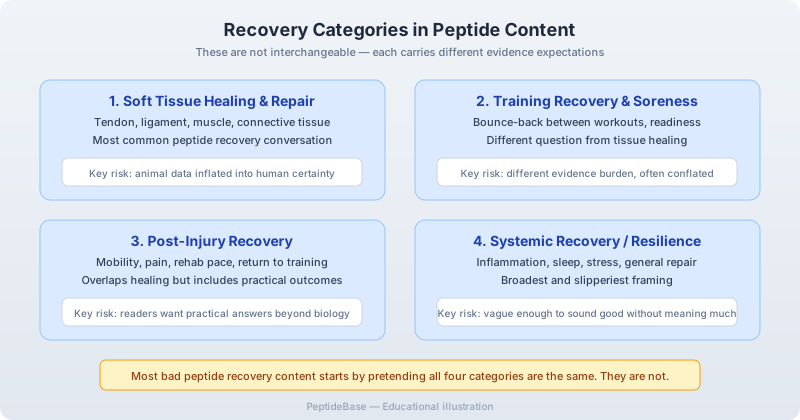 Most bad peptide recovery content starts by pretending all forms of recovery are the same. They are not.
1. Soft tissue healing and repair
This includes tendon, ligament, muscle, and connective tissue discussions. BPC-157 and TB-500 are often pulled into this bucket. This is one of the most common peptide recovery conversations, but it is also one of the easiest places for animal data to get inflated into human certainty.
2. Training recovery and soreness
Some people use "recovery" to mean bouncing back faster between workouts, reducing soreness, or improving readiness to train again. That is a different question from tissue healing, and the evidence burden should be different too.
3. Post-injury recovery
Post-injury recovery discussion often overlaps with healing, but it can also include mobility, pain context, rehab pace, and return-to-training expectations. Claims here need especially careful wording because readers are often looking for practical outcomes rather than abstract biology.
4. Systemic recovery or stress resilience
Some compounds get discussed more broadly for recovery through inflammation, resilience, sleep-related effects, or general repair narratives. That framing is often the slipperiest because it can become vague enough to sound good without meaning much.
Why this topic needs a pillar page first
A lot of peptide recovery content online is a mess because it starts with individual compounds and only later tries to explain what "recovery" was supposed to mean in the first place.
That creates three problems:
- Readers compare unlike with unlike. A tissue-healing discussion gets compared to a general fatigue claim like they are the same thing.
- Wording gets inflated. "Recovery" becomes a catch-all shortcut for any positive biological story.
- The site loses topical discipline. Instead of a clean cluster, you get overlapping pages competing for the same intent with weaker trust.
This pillar page solves that by setting the vocabulary, evidence lens, and comparison framework before later compound-specific pages do the narrower work.
How to evaluate peptides for recovery without getting fooled
The right question is not "which peptide is best for recovery?" The right question is "recovery of what, with what kind of evidence, and how much of that evidence actually involves humans?"
Use this framework:
Evidence type
Is the discussion based mainly on in vitro work, animal data, mechanistic theory, limited human data, or better clinical evidence? A lot of recovery claims collapse these tiers together like they are all basically cousins at the same family reunion. They are not.
Outcome specificity
Was the measured outcome tendon response, inflammation markers, wound healing, muscle recovery, pain behavior, or actual functional recovery in humans? General recovery language often hides weak outcome specificity.
Human relevance
A peptide can look interesting in animal injury models and still have limited direct relevance to real-world human recovery decisions.
Risk and uncertainty framing
If the article sounds more confident than the evidence deserves, trust drops immediately. Recovery is exactly the sort of emotionally attractive topic where uncertainty gets quietly murdered for marketing convenience.
The main peptides commonly discussed for recovery
This section is not a final endorsement list. It is a map of the compounds and compound families most commonly pulled into recovery discussions.
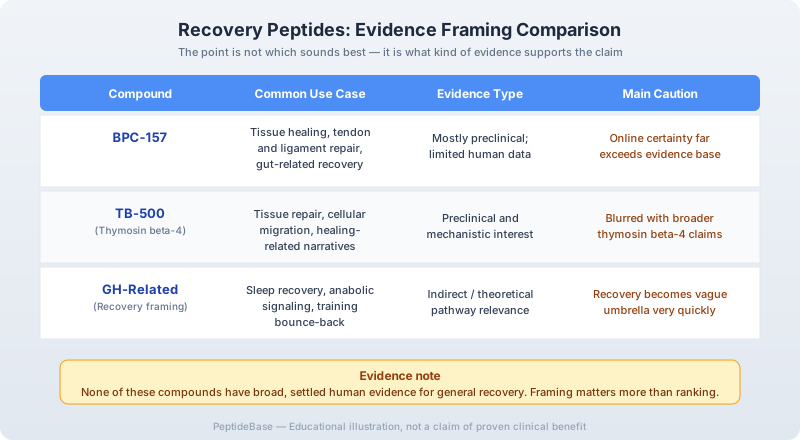 The point is not which peptide sounds best. The point is which recovery claim is being made and what kind of evidence supports it.
BPC-157
BPC-157 is one of the most commonly discussed peptides for recovery because it is often framed around tissue repair, healing, and injury-related use cases. It is probably the clearest example of a compound where preclinical interest has driven a huge amount of online confidence.
What supports the discussion:
- frequent association with tendon, ligament, gut, and tissue-healing conversations
- recurring animal-model and mechanistic interest
- broad visibility across recovery-focused peptide content
What keeps the framing cautious:
- public human evidence is much thinner than many articles imply
- online claims often jump from early evidence to practical certainty too fast
- "recovery" claims can expand far beyond what the underlying evidence clearly supports
Best way to frame it in this cluster:
- strong discussion relevance for tissue-healing and injury-repair content
- weaker justification for blanket "proven recovery" wording
- should link to: BPC-157 overview, BPC-157 for recovery, BPC-157 vs TB-500, and what preclinical actually means
TB-500 / thymosin beta-4 style recovery discussion
TB-500 is commonly discussed for recovery because it is associated with tissue repair, cellular migration, and healing-related narratives. It often appears next to BPC-157 in athlete and performance-adjacent recovery talk.
What supports the discussion:
- repeated use in recovery and injury-healing conversation
- mechanistic and preclinical interest around repair-related pathways
- frequent comparison demand against BPC-157
What keeps the framing cautious:
- evidence interpretation often gets blurred with broader thymosin beta-4 discussion
- human certainty is still much weaker than many simplified articles suggest
- "faster recovery" claims can get vague enough to stop meaning anything concrete
Best way to frame it in this cluster:
- relevant for repair-oriented recovery discussion
- especially important in comparison intent content
- should link to: TB-500 overview, TB-500 for recovery, and BPC-157 vs TB-500
Growth-hormone-related peptides and recovery framing
Some peptides get discussed for recovery because they influence growth-hormone-related pathways, sleep-related recovery narratives, or anabolic signaling. These discussions can overlap with performance, body composition, and tissue repair, which makes the recovery framing broader and often less precise.
What supports the discussion:
- theoretical or indirect links to repair, recovery environment, or training bounce-back
- broader interest from people looking beyond injury-specific compounds
What keeps the framing cautious:
- "recovery" can become a vague umbrella for many different desired outcomes
- indirect pathway relevance is not the same as clean evidence for a practical recovery endpoint
- this category can drift into performance enhancement framing very quickly if the article is not tightly written
Best way to frame it in this cluster:
- more useful as subcluster context than as the core of the recovery pillar
- should stay separate from tissue-repair-specific discussions unless the evidence and use case clearly overlap
Recovery evidence: what seems strongest, weakest, and most uncertain
The most honest way to organize the space is not by hype, but by evidence pattern.
Stronger discussion signal
A stronger discussion signal exists when:
- a compound repeatedly appears in recovery-related evidence and editorial discussion
- the use case is specific, such as tissue healing rather than "better everything" claims
- the article clearly distinguishes preclinical interest from established human outcomes
Weaker discussion signal
A weaker discussion signal exists when:
- the mechanism sounds plausible but practical outcome data are thin
- the recovery claim is broad, vague, or poorly tied to a measurable endpoint
- the content relies heavily on extrapolation from adjacent compounds or biological theory
Highest uncertainty
Uncertainty is highest when:
- the claim language is confident but direct human evidence is sparse
- the use case is emotionally attractive but biologically underspecified
- the article talks about recovery as if soreness, tissue repair, inflammation, sleep, and performance readiness are all one thing
What the evidence actually supports right now
The evidence most clearly supports a cautious statement like this:
Certain peptides are discussed for recovery because of preclinical and mechanistic interest, especially around tissue-healing or repair-related contexts, but broad human-grade confidence is not established across the category. A compound-by-compound recovery comparison can organize those evidence gaps without turning them into recommendations.
That may sound less sexy than the usual internet version, but it is the version that ages better.
A site that wants credibility should be willing to say all of the following at once:
- some compounds are genuinely worth discussing
- some early evidence is worth understanding
- some use cases are more plausible than others
- human certainty is often overstated
- recovery is too broad a category for one-size-fits-all claims
How later cluster pages should branch from this pillar
This pillar should sit above a cleaner recovery cluster rather than trying to do every job itself.
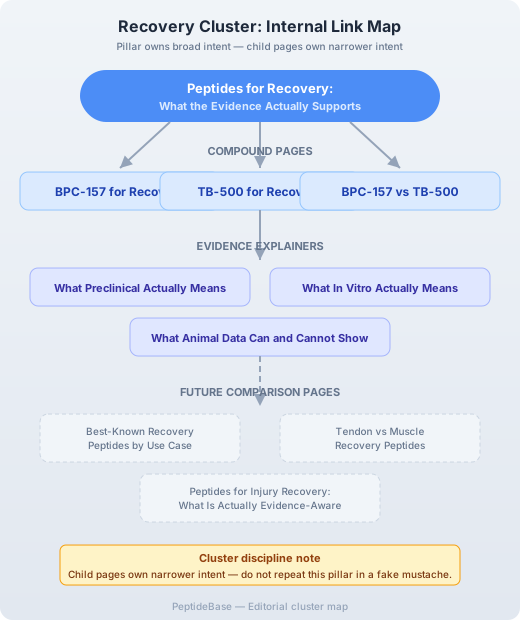 A clean cluster map makes later compound pages more useful and stops the site from publishing five versions of the same article in different wigs.
Core child pages
- BPC-157 for recovery
- TB-500 for recovery
- BPC-157 vs TB-500 for recovery
- What preclinical actually means
- What in vitro actually means
- What animal data can and cannot show
Useful future comparison pages
- Best-known peptides discussed for recovery: evidence by use case
- Peptides for tendon recovery vs muscle recovery
- Peptides for injury recovery: what is actually evidence-aware
Why this internal-link structure matters
It keeps the cluster from cannibalizing itself. This pillar owns the broad intent: peptides for recovery. Child pages should own narrower intent, not repeat the same article wearing a fake mustache.
Common mistakes in recovery peptide content
Treating recovery like one outcome
This is the original sin. If an article never defines what kind of recovery it means, it is already sliding toward mush.
Letting preclinical enthusiasm sound like human proof
This is probably the biggest trust killer in the category. Early evidence can matter without becoming a fake clinical verdict.
Using comparison language before defining the framework
You cannot responsibly compare compounds for recovery until you define which recovery context matters and what evidence threshold you are using.
Writing around desire instead of evidence
Recovery is the sort of topic where readers badly want a clean answer. That temptation makes weak writing look confident and confident writing look useful. They are not the same thing.
FAQ
What are the main peptides discussed for recovery?
The main peptides commonly discussed for recovery are BPC-157 and TB-500, with other compounds sometimes brought in through healing, inflammation, or growth-hormone-related recovery narratives.
Does the evidence prove peptides improve recovery in humans?
No broad statement like that is well supported across the category. The evidence is mixed, uneven, and often more preclinical than many readers realize.
Why is BPC-157 discussed so often for recovery?
BPC-157 is discussed often because of strong online visibility and recurring tissue-healing narratives, especially from preclinical and mechanistic discussion.
Why does this site separate recovery from healing and performance claims?
Because those are related but not identical topics, and blending them creates weaker articles and worse evidence framing.
What should later recovery pages link back to?
They should link back to this pillar for category framing and to evidence explainer pages for preclinical, in vitro, and animal-data interpretation.
Final take
The evidence supports cautious, use-case-specific discussion of some peptides for recovery, not a blanket claim that recovery peptides are proven across the board.
That is the anchor idea this whole cluster should protect. Once that stays clear, later compound pages, comparison pages, and explainer articles can get more specific without turning into the usual internet slop.